

For a long time, the living room revolved around the screen. Furniture faced it, lighting deferred to it, and the room’s rhythm often followed whatever happened to be streaming that night.
That arrangement is beginning to shift. As more people look for ways to soften the constant pressure of digital life, interiors are being shaped around quieter rituals and more tactile forms of attention.
The Global Wellness Institute recently identified Analog Wellness as a defining lifestyle trend, which helps explain why so many homes now include spaces designed less for productivity and more for presence. Vinyl, printed books, handwritten notes, and other physical rituals fit naturally into that impulse because they slow the room down in a way screens rarely do.
This is where the record console starts to matter as more than nostalgia. In a room that is meant to feel grounded, social, and intentionally low-tech, it creates a focal point without asking for another glowing surface.
Vinyl’s Return Has Created a Furniture Problem
The growth of vinyl is no longer a niche story. In 2024, vinyl sales reached $1.4 billion on 43.6 million units, easily surpassing CDs and extending a growth streak that has now lasted nearly two decades.
The generational aspect is especially telling. Gen Z now accounts for a remarkable share of vinyl purchases, and younger buyers are often drawn not just to the sound, but to the collectibility, visual presence, and ritual of physical music.
Once records start entering the home in meaningful numbers, a design question follows almost immediately. Where do they go, and what plays them in a way that feels considered rather than improvised?

Most turntable setups answer that question poorly. A record player ends up on a shelf or side table, speakers get parked wherever there is room, and albums collect in stacks, crates, or bookcases that feel more temporary than intentional.
The listening experience may be thoughtful, but the room rarely is. There is a mismatch between the ritual of analog music and the accidental visual footprint it often leaves behind.
Why the Console Format Solves the Design Problem
That mismatch is part of why the vinyl player cabinet format feels so relevant again. It gives analog listening a proper home, uniting storage, playback, amplification, and speakers within a single furniture piece rather than scattering them around the room.
The broader design climate supports this return. Vintage influences, visible craftsmanship, and a renewed appreciation for furniture that feels lasting rather than disposable have all moved back into the center of the conversation.
A console answers those desires elegantly. It reads as furniture first, which means it contributes to the room’s architecture while still supporting a highly specific ritual.
That is especially important in interiors built around what designers now call the analog room. These spaces are not anti-technology so much as they are intentional about what belongs in view and how it shapes attention.
Wrensilva and the Designed Home for Listening
This is where Wrensilva enters the picture naturally. Founded in 2016, the company builds handcrafted hi-fi consoles in its San Diego workshop, creating pieces that appeal equally to design-minded homeowners and serious listeners.
Their collection draws from the texture and visual language of classic recording studios and vintage consoles, but it is resolved with a distinctly contemporary finish. Locally sourced woods such as Blonde Mahogany, Tobacco Walnut, and Natural Walnut give the pieces warmth and substance, while leather-lined record pockets and brushed metal legs keep them feeling refined rather than retro literalism.
The customization range is also meaningful from a design perspective. Consoles can be specified to show off custom speakers with continuous horizontal grain, or softened with duo-weave speaker fabrics in combinations that allow the piece to sit comfortably within a broader interior scheme.
What makes the furniture especially successful is that the engineering remains visually quiet. Wrensilva developed a multi-layer vibration isolation system, including specialized damping materials and a floating turntable, so the sound can be full and room-filling without the furniture announcing its complexity.
The consoles also move easily between analog and digital listening. With Sonos multi-room capability built in, they do not force a choice between vinyl ritual and streaming convenience, which makes them particularly suited to contemporary homes where both modes of listening coexist.
Designing the Room Around the Console
One of the clearest ways to use a record console well is to let it anchor what many designers would describe as a conversation corner. Soft seating, warm light, tactile upholstery, and a visually grounded furniture piece create the kind of room that encourages lingering rather than scrolling.
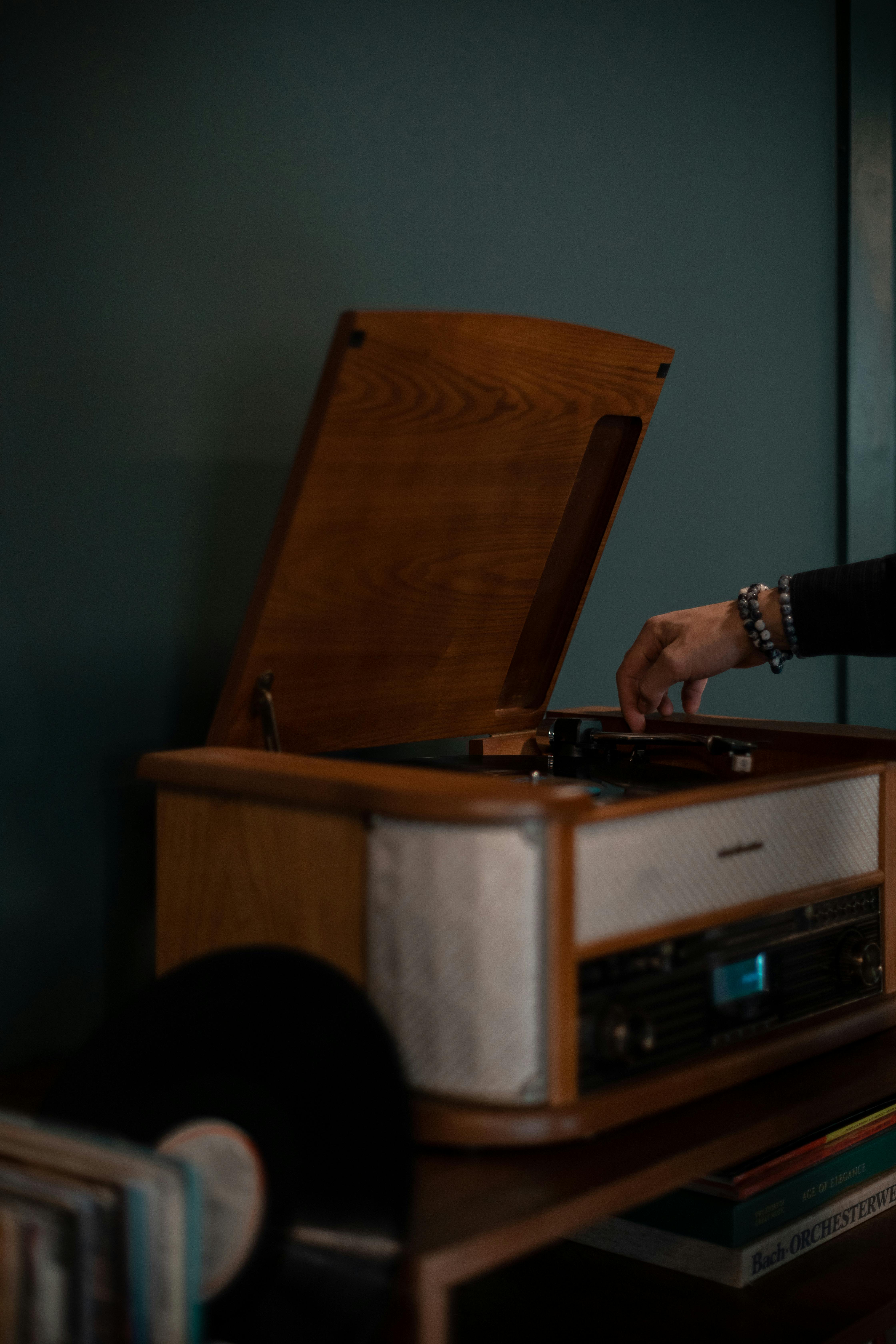
In that setting, the console functions almost the way a fireplace once did. It becomes the place the room gathers around, not because it demands attention loudly, but because it gives people something physical and shared to return to.
That interactivity matters. Selecting an album, placing the needle, and flipping a record all ask for presence, and that small sequence changes how the room is used.
The proportions also help. Wrensilva’s consoles occupy roughly the footprint of a media credenza, which means they can often replace an existing piece rather than requiring an entirely new furniture plan.
Why It Feels Like an Heirloom Again
In a culture shaped by upgrades, subscriptions, and devices that age out quickly, a handcrafted console built to serve multiple generations feels unusually permanent. That sense of permanence is part of the appeal.
Wrensilva reinforces it not only through materials and construction, but through sound shaped in collaboration with figures such as Giles Martin, Manny Marroquin, and Joe Harley.
The best analog objects do more than look beautiful in a room. They change the way the room is inhabited, making it easier to gather, listen, and stay present for a little longer.
That may be the strongest argument for the record console’s return. It is not simply a place to put a turntable, but a piece of furniture that gives a room a slower, richer center of gravity.
For readers drawn to interiors that balance craftsmanship, permanence, and everyday ritual, Wrensilva’s collection of record consoles is well worth exploring. Their designs offer a thoughtful way to bring music back into the room as both sound and structure.